
 Available in US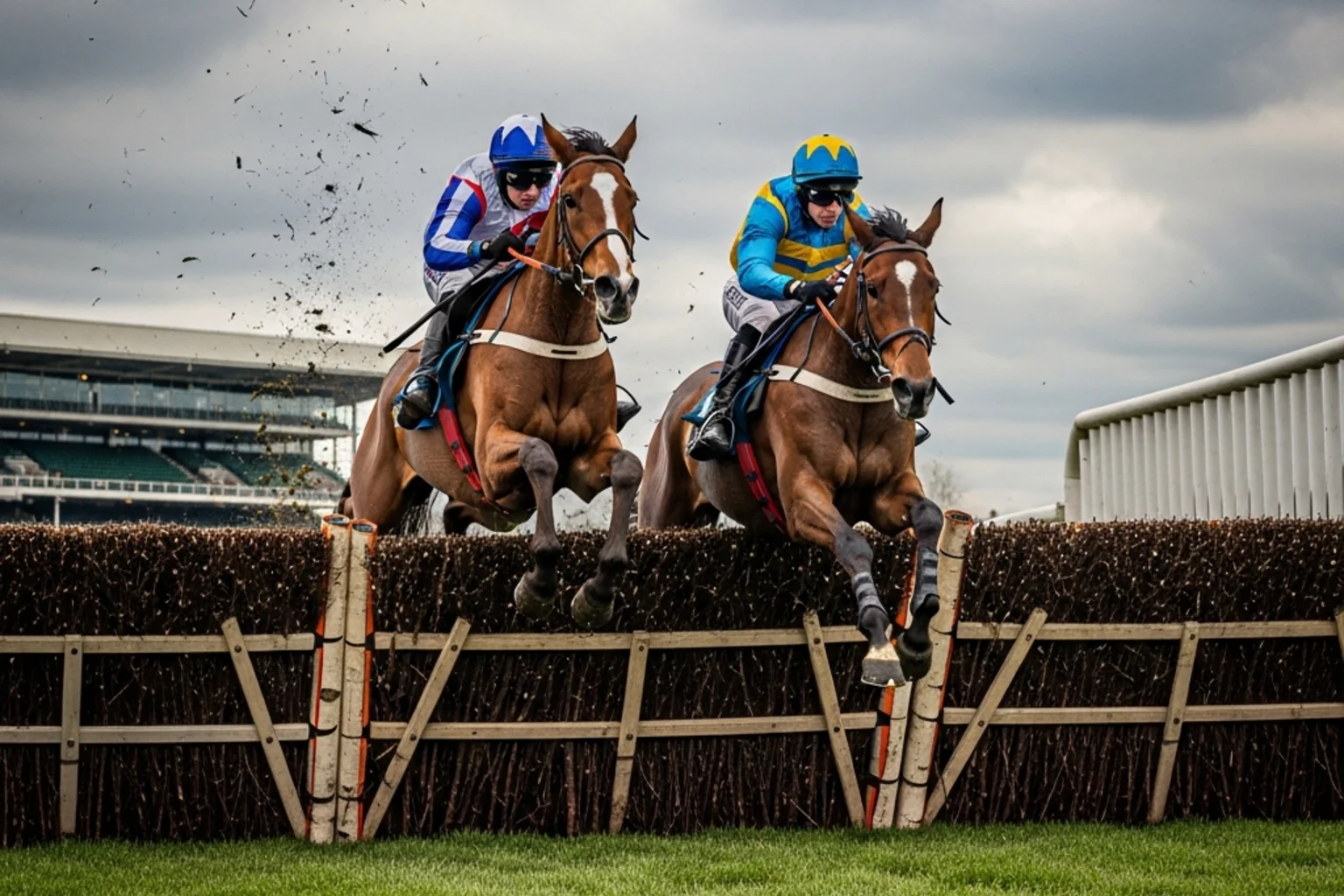
Thursday at Cheltenham: Two Grade 1s, Two Different Betting Puzzles
St Patrick’s Thursday is the festival day that divides neatly into two contrasting Grade 1 examinations. The Stayers’ Hurdle tests stamina over three miles, rewarding horses with the lung capacity and mental resilience to grind through a long race on often testing ground. The Ryanair Chase, run over two miles and five furlongs over fences, asks a fundamentally different question — can your horse combine tactical speed with clean jumping over an intermediate distance? Thursday separates stamina from speed, and your bets should too. The wider context is set out in our Cheltenham betting guide.
These two races sit side by side on the card, yet the betting approach for each is almost entirely distinct. The Stayers’ Hurdle favours proven stayers with progressive form on soft ground and a profile that suggests they will still be travelling when others are emptying. The Ryanair favours sharper, more tactical types — horses that are too fast for the Gold Cup’s three-mile-two test but too good to drop back to two miles. Understanding these contrasts is not just useful analysis; it directly shapes which horses to back and at what price.
Both races have been dominated by Irish-trained runners in recent years, reflecting the broader cross-Irish-Sea dynamic that defines Cheltenham. But the nature of that dominance differs between the two contests, and so does the betting value available to those who read the form carefully.
Stayers’ Hurdle: What Stamina Data Tells Punters
The Stayers’ Hurdle is a race where the form book speaks loudly, and the message is about endurance. Three miles over hurdles at Cheltenham, with the hill to climb in the final half-mile, is a brutally honest test. Horses that have been winning at two miles and five furlongs in the hope of staying the extra distance are regularly found out. The data favours runners with proven stamina credentials — specifically, previous winners over three miles or further on soft or heavy ground.
Age matters in staying hurdles, and the profile of recent winners supports a narrow band. Seven-year-olds with previous festival experience have been particularly effective across all Cheltenham races: OLBG data shows that seven-year-old horses with a prior festival win carry a 28% strike rate. In the context of the Stayers’ Hurdle, that age bracket also represents the point where a horse is physically mature enough to sustain effort over three miles while still being young enough to hold peak fitness.
The Stayers’ Hurdle has also been defined in recent years by the repeat contender. Unlike the novice races, where the field turns over annually, the staying hurdle division tends to feature the same horses returning year after year. This means the form is deeply exposed and the market has ample data to work with. The favourite’s strike rate in this race is above the festival average, though not as high as the Champion Hurdle. When a horse has won or placed in the Stayers’ Hurdle before and returns in good form, opposing it requires strong evidence that something has changed.
Soft ground amplifies the stamina test, and the Stayers’ Hurdle is one of the races most affected by the going. If the ground rides soft or heavy on Thursday, the race becomes even more attritional, which typically benefits the out-and-out stayer over the versatile type who might prefer better conditions. Check the going on Thursday morning — it can be the single most important factor in your Stayers’ Hurdle selection.
Ryanair Chase: The Tactical Alternative to the Gold Cup
The Ryanair Chase was introduced to the festival in 2005, making it the youngest of the four championship-level contests. Its position on the card — run over an intermediate distance of two miles and five furlongs over fences — was designed to capture the chasers that fall between the Champion Chase’s two miles and the Gold Cup’s three miles and two furlongs. In practice, it has become one of the most competitive and tactically intriguing races of the week.
The Ryanair typically attracts two types of horse: the speedy chaser that does not quite stay the Gold Cup distance, and the improving second-season novice that connections believe can compete at the highest level without taking on the ultimate stamina test. This blend creates a race where pace, jumping and tactical positioning matter more than grinding endurance. The winner is often the horse that travels best through the race and is able to quicken in the final two furlongs — a different skill set from the one the Stayers’ Hurdle demands.
Willie Mullins, who holds the all-time record of 113 festival winners according to a Jockey Club press release, has been a dominant force in the Ryanair. The race suits his approach of targeting specific festival contests with horses prepared meticulously for the task, and the Closutton operation’s ability to source high-class French-bred chasers has given Mullins a production line of Ryanair contenders.
From a betting perspective, the Ryanair is a race where the market can be slow to adjust. Because some contenders are genuinely torn between the Ryanair and the Gold Cup until late in the season, prices can be distorted by the uncertainty. A horse that drifts from 4/1 to 8/1 for the Gold Cup might simultaneously shorten from 10/1 to 5/1 for the Ryanair — and that Ryanair price could still represent value if the horse’s form profile suits the shorter trip better. Watching the target declarations in the final week is essential.
Betting Contrasts: How to Approach Each Race Differently
The simplest way to frame the difference between these two Thursday Grade 1s is through the lens of predictability versus volatility. The Stayers’ Hurdle tends to favour experienced, well-known contenders whose form over the distance is thoroughly documented. The market prices them accordingly, and the favourite has a decent record. Your edge in the Stayers’ Hurdle is more likely to come from going analysis — identifying when soft ground will help or hinder the market leader — than from finding an overlooked outsider.
The Ryanair, by contrast, is a race where the market is more vulnerable to mispricing. The late movement of horses between the Ryanair and the Gold Cup means the ante-post market is inherently less reliable than in other Grade 1s. A horse that was priced for the Gold Cup all winter and is redirected to the Ryanair in the final week might find itself at generous odds because the market has not fully adjusted. If the form data suggests the horse is better suited to the Ryanair’s distance and tempo, that price discrepancy is where the value sits.
Staking should reflect these differences. In the Stayers’ Hurdle, a straight win bet on your preferred contender — or a dutching approach across two contenders if the market is tight at the top — makes sense. The field is usually smaller and the form is well established. In the Ryanair, each way can be more appropriate, particularly if you are backing a horse at 8/1 or longer that you believe has a strong place chance even if it cannot beat the favourite. The wider field and more tactical nature of the race mean placings are harder to predict, which tilts the odds in favour of the place part of your bet. Friday belongs to the Gold Cup.
Whatever your approach, the key discipline for Thursday is to treat these races as entirely separate puzzles. Punters who back the same type of horse in both — the favourite in the Stayers’, the favourite in the Ryanair — are missing the point. The races reward different profiles, different conditions and different betting strategies. Analyse each on its own terms, and your Thursday will be sharper for it.
