
 Available in US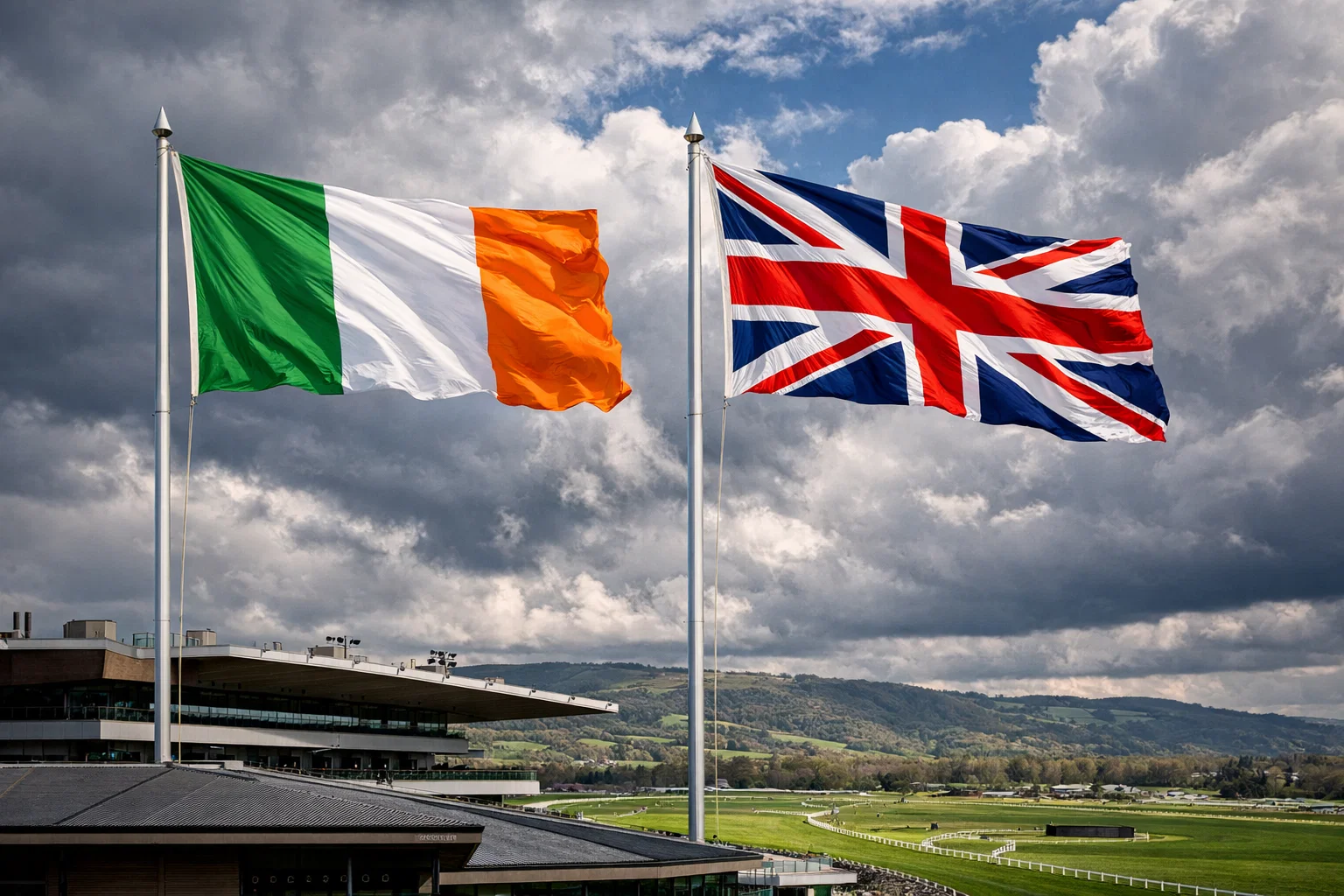
The Prestbury Cup: How Ireland Turned Cheltenham Into a One-Sided Contest
The Prestbury Cup is the unofficial scoreboard that tracks the annual battle between Irish-trained and British-trained runners at the Cheltenham Festival. It has existed since 2012, and in that time it has told a single, relentless story: Ireland wins. The scoreboard reads 204–128 in Ireland’s favour across twelve editions — and the gap is still growing. The wider context is set out in our Cheltenham betting guide.
For punters, the Prestbury Cup is more than a geopolitical curiosity. It is a data set that quantifies the competitive imbalance between the two nations and translates directly into betting decisions. If Irish-trained horses win more races, and win them at a higher rate relative to their representation in the field, then the nationality of the trainer becomes a legitimate factor in your selection process. Ignoring the Prestbury Cup data is like ignoring the going report — you can do it, but your selections will be weaker for it.
Twelve Years of Scores: The Numbers Behind Ireland’s Dominance
The scale of Ireland’s advantage becomes clearer when the numbers are laid out year by year. In 2025, Ireland won the Prestbury Cup by a margin of 20-8, as reported by ESPN. That was not an outlier; it was consistent with a decade-long pattern of Irish dominance. Britain has not won the Prestbury Cup since 2015, and the recent scores suggest the trajectory is accelerating rather than stabilising.
The cumulative figures are stark. Over twelve editions, Irish-trained runners have won 204 of the 332 qualifying races, amounting to a win rate of 61.3%, according to Cheltenham Betting Offers. British-trained runners account for 128 wins — 38.6%. That gap of more than twenty percentage points is not a statistical blip; it is a structural advantage that persists year after year regardless of individual horse retirements, trainer changes or ground conditions.
The most striking illustration of that structural advantage came in 2021, when Irish-trained horses won approximately 82% of the races while constituting only around 40% of the runners, as documented by Cheltenham Betting Offers. In other words, the Irish contingent was less than half the field but produced more than four out of every five winners. That kind of outperformance cannot be explained by luck or a single supertrainer — it reflects a systemic difference in the quality, preparation and targeting of horses sent across the Irish Sea.
The Grade 1 races tell an even more lopsided story. In recent festivals, Ireland has regularly won ten or more of the fourteen Grade 1 contests, including the championship races that carry the most prize money and prestige. The Champion Hurdle, Gold Cup and Stayers’ Hurdle have all been dominated by Irish-trained contenders, and even the races where Britain might historically have expected to compete — the Champion Chase, the Arkle — have increasingly fallen to raiders from Closutton and Cullentra. For British jump racing, the Prestbury Cup has become a scoreboard that quantifies a crisis — one that the sport’s authorities acknowledge but have not yet been able to reverse.
Why Ireland Wins: Investment, Pipeline and the Point-to-Point Advantage
The reasons behind Ireland’s dominance are structural, not accidental. The first and most significant factor is the horse-buying pipeline. Irish point-to-point racing serves as a talent identification system that has no equivalent in Britain. Young horses are tested over fences in competitive point-to-points, their ability is assessed early, and the best are purchased — often at significant prices — by wealthy owners who place them with the leading Irish trainers. This pipeline produces a steady stream of high-quality National Hunt horses that arrive at Cheltenham already educated, battle-hardened and race-fit.
RTÉ racing analyst Jane Mangan has explained the dynamic succinctly: “Ireland has been recruiting the best horses for the last five, six or seven years, and the results have motivated those trainers in the UK to change their purchasing strategies, which I think has resulted in their enhanced results.” Mangan’s observation highlights both the cause of Irish dominance — aggressive, targeted recruitment — and the beginning of a British response. But the gap remains wide, and the British purchasing correction is still in its early stages.
The second factor is training infrastructure. Irish yards — Mullins at Closutton, Elliott at Cullentra, de Bromhead at Knockeen — operate at a scale and with a focus on the Cheltenham Festival that most British operations cannot match. The Irish training centres benefit from terrain that resembles Cheltenham’s hills, softer winter ground that keeps horses sound, and a culture where the festival is the defining objective of the entire season. British training centres, by contrast, are often flatter, drier and oriented toward a broader range of targets across the jumps and flat calendar.
The third factor is prize money differential. The Cheltenham Festival offers purses that dwarf anything available in Irish domestic racing, which creates an overwhelming financial incentive for Irish trainers to target the meeting. British trainers, who have access to valuable domestic prizes year-round, may be less singularly focused on the festival. The result is a concentration of Irish preparation and intent that the British equivalent does not match.
What the Prestbury Cup Means for Punters: Trainer Origin as a Betting Filter
The practical betting application of the Prestbury Cup data is straightforward: give Irish-trained runners an automatic edge in your initial assessment. This does not mean backing every Irish horse blindly — plenty of them lose — but it does mean that when you are torn between two selections of roughly equal form, the Irish-trained runner has a decade of statistical evidence supporting the choice.
In Grade 1 races, the Irish advantage is most pronounced. These are the races where the quality of the horse matters most and the Mullins and Elliott operations send their very best. Opposing the leading Irish-trained contender in a championship race requires a specific, data-backed reason — not just a hope that this will be the year Britain fights back.
In handicap races, the picture is more nuanced. The Irish advantage still exists, but the handicapping system is designed to level the playing field by assigning weights based on ability. A well-handicapped British horse from a trainer who targets Cheltenham specifically — Skelton, Nicholls, Henderson — can absolutely win a festival handicap. The key is whether the trainer has demonstrated an ability to have horses ready for the unique demands of the week. In these races, trainer form and course form outweigh national origin as betting filters.
There is also a subtler application for each way punters. If an Irish-trained horse at a longer price has form that suggests it will be competitive without necessarily winning, the Prestbury Cup data supports it holding a place position. Irish runners at 10/1 or longer in competitive handicaps carry a structural advantage that the market does not always fully price, which creates each way opportunities that the data backs up year after year. The Irish yards behind it appear in the trainer statistics.
The Prestbury Cup will remain relevant until the underlying structural factors change. For now, the numbers say what they say: Irish-trained horses win at Cheltenham at a rate that demands respect in every betting decision you make during festival week.
