
 Available in US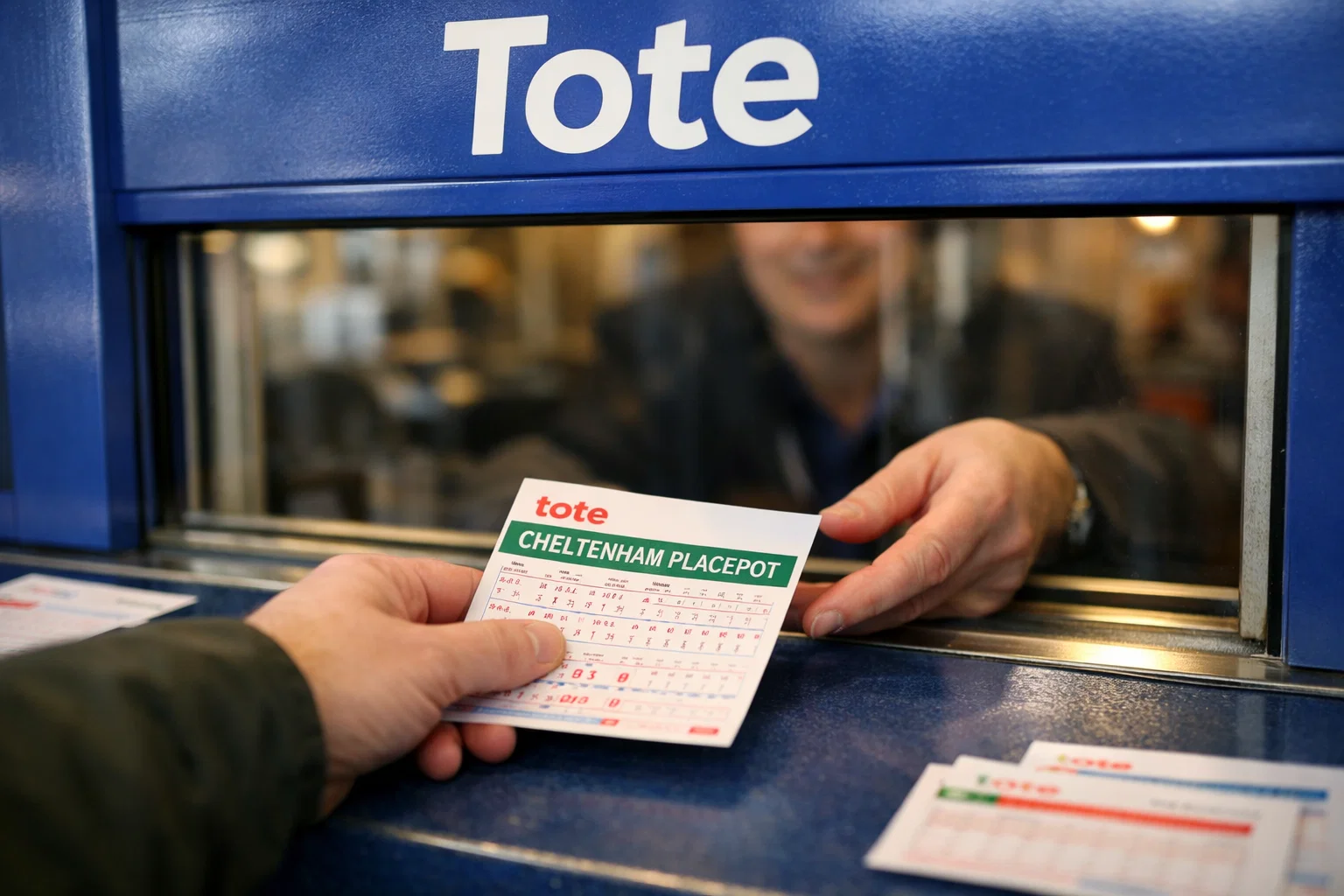
The Cheltenham Placepot: A Different Way to Bet Across Six Races
The Placepot is the pool bet that rewards consistency rather than one big pick. While accumulators and Lucky 15s dominate the conversation during festival week, the Placepot quietly offers something different — a chance to engage with six consecutive races on the card, with a pool prize that can reach impressive figures at Cheltenham, all from a stake that starts at pennies per permutation. The wider context is set out in our Cheltenham betting guide.
The structure is simple in principle: select a horse to place in each of the first six races on the day’s card. If all six of your selections finish in the places, you win a share of the Placepot pool. The catch is that “place” means different things in different races, the cost of covering multiple selections in each race multiplies rapidly, and the pool is shared between all winning ticket holders — so the payout depends not just on your success but on how many others also got it right.
At Cheltenham, where the pools are the largest of the year and the racing is the most competitive, the Placepot becomes a genuinely interesting betting proposition. Getting through all six races is difficult, which means the dividend when you do can be substantial. The Placepot rewards consistency, not one big pick, and that philosophy aligns well with a festival where chaos is the norm.
How the Placepot Works: Pool, Place Terms and Payouts
The Placepot is operated by the Tote, the pool betting operator in UK racing. All stakes go into a single pool, the Tote deducts its commission (typically around 27%), and the remainder is shared equally among all winning units. Your stake buys one or more units in the pool, with a minimum unit stake of 10p in most cases, though many punters play at £1 or £2 per line.
The place terms in the Placepot follow standard pool rules. In races with five to seven runners, a placed horse must finish first or second. In races with eight or more runners, it must finish in the first three. In handicap races with sixteen or more runners, the first four count as placed. These terms are slightly different from the fixed-odds each way terms offered by bookmakers, so do not assume they are identical.
If a race has fewer than five runners, only the winner counts as placed — the Placepot effectively becomes a win bet for that leg. This is a trap for the unwary at Cheltenham, where some championship races can end up with small fields after late withdrawals. If the Champion Chase runs with four declared runners, you need the winner in that leg, not just a placed horse.
The payout depends entirely on the size of the pool and the number of winning units. On a typical Cheltenham day, the pool can exceed £1 million, and if the results are difficult — which they usually are — the dividend per £1 unit can run into hundreds or even thousands of pounds. Conversely, if the favourites dominate the card, more punters will have winning tickets and the dividend shrinks. The Placepot’s attractiveness is directly proportional to the unpredictability of the card.
Selection Strategy: Bankers, Covers and Keeping Your Permutation Count Sane
The key strategic decision in the Placepot is how many selections to use in each leg. Using one horse per race (a “banker” in each leg) gives you a single-line Placepot that costs your unit stake once. Using two horses in one leg doubles the number of lines. Using three in one leg triples it. The total cost is the unit stake multiplied by the product of selections across all six legs — so 1×2×1×3×1×2 gives you twelve lines at your chosen unit price.
At Cheltenham, where the racing is relentlessly competitive, the temptation is to cover multiple horses in every leg. Resist it. A Placepot with three selections in five of the six legs costs 243 lines — at £1 per line, that is £243. For most recreational punters, that stake is disproportionate to the expected return. The art of the Placepot is identifying where you can confidently use a single banker and where you need to spread your coverage.
The data helps here. The Champion Hurdle favourite has won 52% of the time since 2000, as Betway has documented. If the Champion Hurdle falls within your six-race window and the favourite looks strong, that is a natural banker leg — one selection keeps costs down while the probability of surviving that leg is relatively high. Willie Mullins, reflecting on the spread of his success across different owners, has noted: “For me I enjoy that it gets spread out and it’s not just one owner and that’s the fun of it.” That spirit of diversification — spreading your chances rather than concentrating them — is precisely the philosophy the Placepot demands.
The races where you need covers are the competitive handicaps and the races with open-looking fields. If a novice hurdle features eight closely matched runners with no obvious favourite, using two or three horses in that leg is prudent. The cost multiplies, but the probability of surviving the leg multiplies with it.
Managing Permutations: Cost vs Coverage Trade-Offs
The discipline of Placepot betting is permutation management. Every additional selection in a single leg multiplies your total cost, and the multiplication is aggressive. The most common mistake is over-covering in too many legs and producing a total stake that makes the Placepot feel like a high-risk, high-cost bet rather than the low-stakes consistency play it is meant to be.
A practical approach is the “two banker, two cover” structure: identify two legs where you have a strong single selection, two legs where you want two horses, and two legs where you allow yourself three. The permutation count for this structure is 1×1×2×2×3×3 = 36 lines. At £1 per line, that is a £36 investment — reasonable for a festival day and enough coverage to survive most combinations of results without blowing the budget.
Remember that with favourites winning only 29.2% of the time at Cheltenham overall, as Betway data confirms, you cannot rely on market leaders to carry your Placepot through all six legs. The legs most likely to eliminate you are the ones where you have used a single selection and that horse finishes out of the places. Choosing your bankers carefully — in races where the form is most readable and the favourite’s strike rate is highest — reduces this risk.
One final tip: check whether the Tote offers a “Placepot guarantee” on Cheltenham days, where a minimum pool size is guaranteed. A larger pool means a larger potential payout, and during festival week the pools are routinely among the biggest of the year. The Placepot will not win you money every day. It is designed to lose most days and pay handsomely on the occasions it comes through. Set your budget per day, manage your permutations, and let the pool do its work across the festival. Picking six races starts with reading the racecard.
If you are new to pool betting, consider starting with a small unit stake on the opening day — even 50p per line gives you meaningful coverage without significant financial exposure. Use Tuesday as a learning day to understand how the bet settles, how the dividend is announced, and how close (or far) your selections came to surviving all six legs. By Wednesday, you will have a clearer sense of how many covers you need per leg and whether the Placepot fits your betting style for the remainder of the week.
