
 Available in US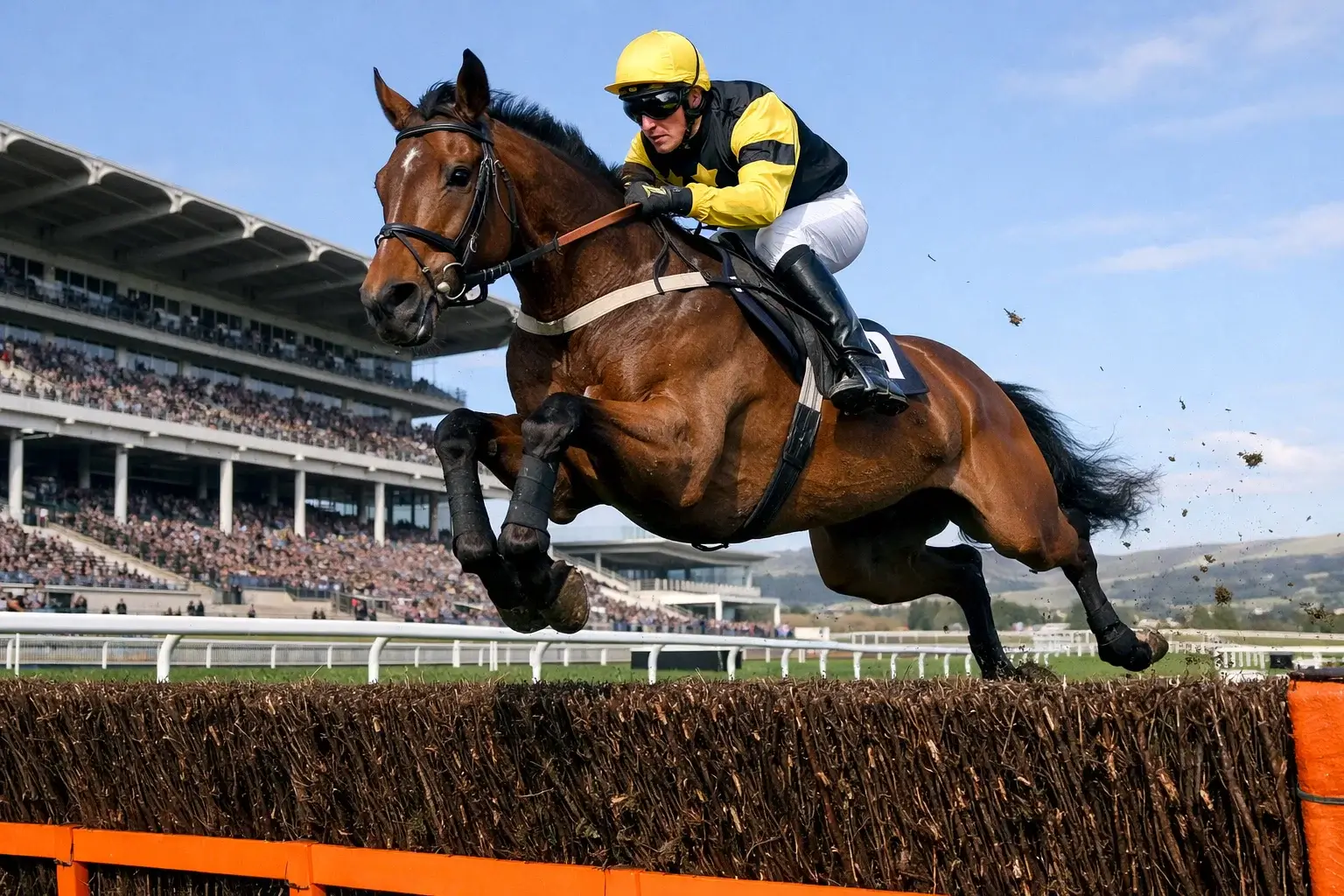
Tuesday’s Headline Races: Why the Arkle and Supreme Set the Festival’s Betting Tempo
The Cheltenham Festival opens on Tuesday with two Grade 1 novice races that serve as more than just the first contests on the card. The Supreme Novices’ Hurdle — the traditional curtain-raiser that produces the famous “Cheltenham roar” — and the Arkle Challenge Trophy Chase are the races that establish the festival’s early narrative. If the favourites land, confidence spreads through the betting ring and punters settle into their strategies. If outsiders prevail, the mood shifts to caution, and the rest of the week is approached with greater respect for the unpredictable. The wider context is set out in our Cheltenham betting guide.
The novices open the festival — and set the market’s mood. For punters, these two races also present a distinctive challenge. Novice form is, by definition, less exposed than the form in open championship races. Horses arriving at Cheltenham for the Arkle or Supreme may have contested only a handful of races over fences or hurdles, and the quality of opposition they have faced varies enormously. Reading novice form requires a different skill set from reading the Gold Cup market, and the mistakes that novice races punish are different too.
Arkle Chase 2027: Contenders, Course Demands and Betting Angles
The Arkle is a two-mile novice chase, and it asks a straightforward but demanding question: can your horse jump fences quickly and accurately at speed over the shortest championship distance? The answer requires a combination of natural jumping talent, tactical pace and the ability to handle the Cheltenham terrain — the undulations, the stiff fences and the relentless uphill finish. Horses that have looked brilliant at flat tracks like Sandown or Kempton do not always reproduce that form at Cheltenham, where the track’s geography punishes one-dimensional speedsters.
Irish-trained novices have dominated the Arkle in recent years, reflecting the broader pattern of cross-Irish-Sea superiority that defines the festival. In 2024, Irish trainers won 18 of 27 festival races and 12 of 14 Grade 1 contests, as documented by Cheltenham Horseracing Guide. The novice categories have been particularly lopsided, with Irish point-to-point graduates arriving at Cheltenham with more racing experience over obstacles than their British counterparts.
BHA chief executive Julie Harrington has acknowledged the structural challenge, noting that the rate of decline of top-level British jump racing has outstripped the measures implemented to address it. That assessment resonates strongly in the Arkle, where the pipeline of British novice chasers has struggled to match the Irish production line. For punters, the implication is practical: Irish-trained Arkle contenders start with a structural edge that the market recognises but does not always fully price.
The betting angles in the Arkle revolve around jumping reliability. A horse that has fallen or made serious errors in its novice chase career is a higher-risk proposition over Cheltenham’s fences, regardless of its speed on the flat. Conversely, a horse that has jumped cleanly in two or three novice chases and won by decisive margins is demonstrating the combination of accuracy and class that the Arkle rewards. Price-wise, the Arkle favourite tends to have a strike rate that is above the festival average, making it one of the more bettor-friendly Grade 1 races on the card.
Supreme Novices’ Hurdle 2027: Speed, Youth and the Market Signals
The Supreme is the first race of the entire festival, which gives it an emotional significance disproportionate to its place on the programme. The “Cheltenham roar” — the wall of sound that greets the field as it jumps off — is one of the iconic moments in British sport, and it can genuinely affect the horses. Some thrive on the atmosphere; others are unsettled by it. A horse’s temperament and its experience of large, noisy crowds are factors that matter more in the Supreme than in almost any other race.
The Supreme is run over two miles and half a furlong over hurdles, making it a test of speed rather than stamina. The typical winner is a horse that has dominated in two-mile novice hurdles through the season, often with a decisive turn of foot in the final furlong. Stamina doubts rarely matter in the Supreme — if a horse can stay two miles, it can stay two miles and a half-furlong. What matters is the quality of the opposition it has faced and the manner of its victories.
The Irish challenge is at least as strong in the Supreme as in the Arkle. The Mullins and Elliott yards regularly produce novice hurdlers of sufficient quality to head the market, and the Dublin Racing Festival in February often serves as a key trial. A horse that wins a Grade 1 novice hurdle at Leopardstown in February and then heads to Cheltenham as Supreme favourite is following a well-worn path — and a historically productive one.
Market signals in the Supreme are particularly important because the form is thin. With limited public data, insider knowledge — stable confidence, private gallop reports, training ground impressions — carries more weight than in races with deeply exposed form. A horse that shortens from 6/1 to 3/1 in the final 48 hours before the Supreme is doing so because those with access to private information are backing it. Watching the market in the days before Tuesday is arguably more valuable for the Supreme than for any other race at the festival.
Betting on Novices: What Novice Form Tells You — and What It Hides
Novice races at Cheltenham are both the most exciting and the most treacherous betting propositions. The excitement comes from the unknown: every horse is relatively unexposed, and the potential for a future champion to announce itself at Cheltenham is what gives the novice races their electric atmosphere. The treachery comes from the same source. You are betting on incomplete information, and the gaps in the form book are wider than in any open championship race.
What novice form tells you is the horse’s basic ability and its aptitude for the discipline. A novice chaser that has won three from three over fences, jumping cleanly each time, has demonstrated that it can handle the basic demands. A novice hurdler that has beaten subsequent winners in its maiden and novice hurdles has proven that the form it has shown has substance. These are the positive signals that the form book provides.
What novice form hides is the ceiling. A horse might have beaten moderate opposition by ten lengths and looked like a world-beater, only to meet a genuine Grade 1 animal at Cheltenham and be exposed as a good horse, not a great one. The jump from novice Grade 2 form to Cheltenham Grade 1 form is one of the biggest quality leaps in racing, and not every horse makes it. The price on your selection should reflect this uncertainty — backing a novice at 6/4 at Cheltenham is rarely wise, because the probability of a setback is higher in novice races than in open championships. The rest of the week is mapped in day-by-day betting.
Age data provides one useful additional filter. Seven-year-old horses with prior festival experience carry a 28% strike rate in subsequent appearances, according to OLBG. In novice races, most runners will be making their first festival appearance, so this filter applies only to the occasional second-season novice or the horse that ran as a bumper horse at the previous year’s festival. Where it does apply, it is a meaningful edge: a horse that has already experienced the Cheltenham cauldron and come back to compete is a different proposition from one arriving for the first time.
