
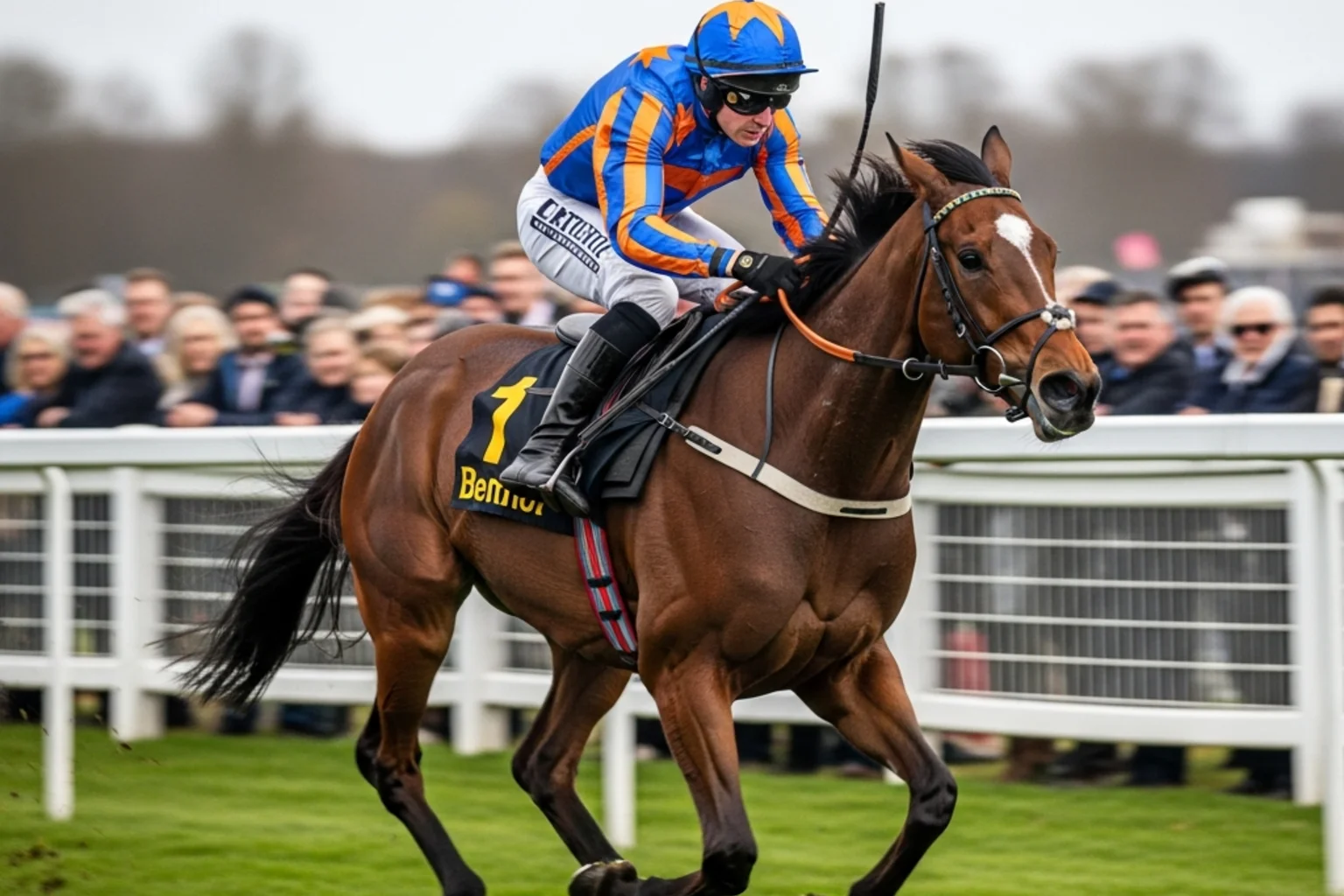
Cheltenham Jockey Records: Why the Rider Still Matters in a Trainer’s Sport
National Hunt racing is often described as a trainer’s game, and at Cheltenham that description holds more truth than fiction. The trainer selects the horse, plans its campaign, chooses the race and determines its fitness. But the jockey is the last variable you control through selection — the one person who must make split-second decisions over fences and hurdles in a cauldron of noise, pressure and physical danger. At the festival, where the margins between winning and losing are measured in lengths and sometimes less, the jockey’s experience, temperament and Cheltenham-specific knowledge can tip the balance.
Jockey statistics at the festival reveal patterns that go beyond raw ability. The riders who dominate the Cheltenham leaderboard tend to share specific traits: familiarity with the track’s unique layout, the discipline to wait on the hill rather than committing too early, and the relationship with a top stable that gives them access to the best-quality rides. Understanding who these jockeys are, what their records say, and how to use jockey data in your betting is a layer of analysis that most casual punters overlook entirely.
All-Time Jockey Records: Walsh, McCoy, Geraghty and the Festival Legends
The all-time Cheltenham Festival jockey record belongs to Ruby Walsh, who retired in 2019 with 59 festival winners to his name, as recorded by Betway. Walsh’s record was built over two decades of partnership with Willie Mullins, and his ability to ride the Cheltenham hill with patience and precision became a defining feature of the modern festival. His record of seven winners in a single festival, achieved in both 2009 and 2016, underlines the scale of his dominance during that era.
Behind Walsh in the all-time standings sit AP McCoy and Barry Geraghty, both of whom accumulated their tallies across long careers at the top of the sport. McCoy, the relentless competitor who was champion jockey for twenty consecutive seasons, brought an intensity to Cheltenham that the crowd responded to and opponents feared. His festival record reflects sheer volume of rides as much as skill — McCoy would ride every race on the card if he could — but his ability to get horses to run for him in the final half-mile of a Cheltenham race was a genuine competitive advantage.
Geraghty’s record is notable for its versatility. While Walsh was primarily associated with Mullins’ hurdlers and McCoy with a broad range of trainers, Geraghty excelled across disciplines — hurdles, chases, novice events and handicaps alike. His later career as Nicky Henderson’s stable jockey gave him access to Britain’s strongest festival squad, and his Cheltenham record reflects the quality of rides available to a jockey embedded in a top operation.
The common thread across all three legends is the same: they rode for the most powerful yards and they knew Cheltenham intimately. The track rewards riders who understand its gradients, its quirks and its timing demands. A jockey arriving at Cheltenham for the first time — or riding an unfamiliar course with infrequent visits — is at a measurable disadvantage compared to one who has ridden there dozens of times.
Current Leaders: Townend, Blackmore and the Active Leaderboard
The active jockey leaderboard at Cheltenham is led by Paul Townend, who has stepped into the role Walsh vacated as Mullins’ first-choice rider. OLBG data shows Townend with 34 festival wins across the past ten festivals and a level-stakes profit of +12.53. That profit figure is the detail that should catch every punter’s eye: it means that backing Townend at starting price on every ride across a decade of festivals would have yielded a profit. In a market where the bookmaker nearly always wins over time, that is a remarkable distinction.
Townend’s strength lies in his composure under pressure. He rarely commits too early on the run up the Cheltenham hill, and his tactical awareness in championship races — where timing the final challenge is critical — has produced a string of high-profile winners. His partnership with Mullins gives him access to the deepest pool of talent at the festival, which naturally inflates his win tally, but the positive LSP confirms that his mounts outperform even the market’s expectations.
Rachael Blackmore has become one of the most significant figures in recent Cheltenham history. Her 2021 festival, where she was named Leading Jockey with six winners, broke new ground and her consistent presence among the winners in subsequent years has confirmed that her Cheltenham ability is no novelty. Blackmore rides primarily for Henry de Bromhead, whose string may lack the depth of Mullins’ but compensates with individual quality in the championship races.
Among British-based jockeys, Nico de Boinville (retained by Nicky Henderson) and Harry Skelton (brother and stable jockey to Dan Skelton) are the most likely to feature among the festival winners. Their records are solid but less dominant than the Irish contingent, reflecting the broader competitive imbalance between the two nations at Cheltenham. Backing British jockeys selectively — in races where their mount has strong form and the trainer has a specific festival target — tends to be more productive than following them across the entire card.
Using Jockey Data: When the Booking Tells You Something the Form Doesn’t
Jockey data is most useful not as a primary selection tool but as a confirmation signal or a warning flag. The two most instructive scenarios are jockey switches and jockey choices.
A jockey switch occurs when a horse’s regular rider is replaced by a different jockey for the festival. Sometimes this is unavoidable — injury, suspension or a clash of commitments. But when a top jockey voluntarily gives up a ride to take another in the same race, the switch tells you something. It suggests the jockey — or more often the trainer — believes the alternative ride has a better chance. If Townend opts to ride Horse A over Horse B from the same Mullins string, that decision is based on private intelligence about each horse’s wellbeing and readiness. The public market will not reflect that information until the money starts moving, so a jockey switch is an early signal worth acting on.
A jockey choice is similar but broader. When a top freelance jockey has three or four rides available across the card and selects specific races to ride in, the selections reveal which horses connections believe have the strongest chance. This is particularly useful in the handicaps, where the form picture is murkier and inside knowledge about a horse’s current wellbeing carries more weight.
The practical application is simple: before you finalise your Cheltenham selections, check the jockey bookings. If a proven festival jockey has committed to your fancy, that adds confidence. If a top jockey has chosen a different horse in the same race, consider why — and consider whether your selection is as strong as you first thought.
There is one further dimension worth noting: conditional jockeys and the claiming system. In certain handicap races — most notably the Martin Pipe Conditional Jockeys’ Handicap Hurdle on Friday — less experienced riders carry a weight allowance that can offset their lack of Cheltenham experience. A 5-pound claim effectively reduces the horse’s racing weight, which in a handicap is a tangible advantage. The trade-off is that the jockey may lack the tactical awareness to navigate a packed Cheltenham field as effectively as a seasoned professional. When a claiming jockey is booked on a well-handicapped horse from a top yard, it can be a powerful combination — the weight concession amplifies the trainer’s advantage. When the same jockey is on a horse from an unfamiliar stable with no festival pedigree, the claim is unlikely to compensate for the overall lack of preparation. Jockey data, like everything else at Cheltenham, is about context.